Is Tile or Vinyl Better for a Bathroom?
The answer depends on what matters most to you.
Tile may be a better fit if you prioritize long-term durability, design flexibility, and a traditional or high-end appearance.
Vinyl may be a better fit if you prioritize comfort, easy maintenance, moisture resistance, and a simpler installation.
Both ceramic/porcelain tile and appropriately rated vinyl flooring can work in moisture-prone bathrooms when installed according to the manufacturer's requirements.
The right choice ultimately comes down to your bathroom, lifestyle, design preferences, and budget.
Tile Flooring in the Bathroom
Tile has been a popular bathroom flooring choice for decades.
Ceramic and porcelain tile are available in countless colors, sizes, patterns, textures, and finishes, making it possible to create everything from a simple traditional bathroom to a completely custom design.
Pros of Tile Flooring
Excellent Durability
Tile is a hard surface that can handle significant everyday wear.
Ceramic tile is resistant to scratches and stains, while porcelain is known for its durability and low-maintenance qualities.
When properly installed and cared for, tile can provide a long-lasting flooring solution.
Water Resistant
Tile is naturally well suited to bathrooms because it doesn't absorb water in the same way that many other flooring materials can.
Porcelain and ceramic tile are commonly used in moisture-prone areas, including bathrooms.
However, remember that the tile itself isn't the entire flooring system.
Grout, seams, the subfloor, and the installation method all matter when it comes to managing moisture.
Huge Variety of Styles
If you have a specific bathroom design in mind, tile gives you plenty of options.
You can choose from:
This makes tile a particularly versatile choice for homeowners who want their bathroom floor to be a major design feature.
Works Well With Heated Floors
Tile is also commonly used with radiant floor heating systems.
If you hate stepping onto a cold bathroom floor first thing in the morning, radiant heat underneath tile can make a noticeable difference.
Cons of Tile Flooring
Hard Underfoot
Tile is a hard surface.
While that's part of what makes it durable, it can also make the floor less forgiving if you're standing for long periods.
It can also be less comfortable if you frequently sit or kneel on the bathroom floor.
Can Feel Cold
Without radiant heating, tile can feel cold underfoot, particularly during colder months.
Grout Requires Maintenance
The tile itself may be easy to clean, but the grout lines require additional attention.
Grout can become discolored over time and may require cleaning and periodic maintenance.
Installation Can Be More Involved
Tile installation generally requires careful subfloor preparation, layout, cutting, adhesive or mortar, and grouting.
An uneven or unstable surface can create problems with the finished installation, so proper preparation is important.
Vinyl Flooring in the Bathroom
Vinyl has become an increasingly popular bathroom flooring option.
Modern luxury vinyl plank and luxury vinyl tile can mimic the appearance of wood, stone, and ceramic tile while providing a resilient surface that is comfortable and easy to maintain.
Pros of Vinyl Flooring
Excellent Moisture Resistance
Many vinyl flooring products are designed to resist water and moisture, making them well suited to bathrooms.
However, it's important to look at the specific product's waterproof rating and installation requirements rather than assuming every type of vinyl is waterproof.
Sheet vinyl has another advantage: because it can be installed in large sections with fewer seams, it can reduce potential points where moisture could reach below the flooring.
Comfortable Underfoot
One of the biggest differences between vinyl and tile is how they feel.
Vinyl has some flexibility and resilience underfoot, making it generally more comfortable to stand on than a hard surface such as tile. It can also produce less sound when walked on.
That can be particularly appealing in a bathroom where you're standing at the sink or getting ready for the day.
Easy to Clean
Vinyl flooring is relatively simple to maintain.
Routine sweeping, vacuuming, and damp mopping can help keep it clean.
It's also less likely to hold onto dirt and hair than carpet, making it a practical option for busy households.
Wide Variety of Styles
Today's vinyl flooring isn't limited to the patterns you may remember from older homes.
Luxury vinyl can replicate the appearance of:
This gives homeowners plenty of design options without necessarily choosing the actual material being replicated.
Can Be Easier to Install
Depending on the product, vinyl flooring can have installation methods that are less involved than traditional tile.
That can potentially reduce installation complexity and project time.
However, proper subfloor preparation is still important. Vinyl can show imperfections underneath it, particularly when installed over an uneven surface.
Cons of Vinyl Flooring
Can Be Damaged by Sharp or Heavy Objects
Vinyl is durable, but it isn't indestructible.
Sharp objects, heavy furniture, and certain impacts can potentially dent, scratch, or damage the flooring.
Some Vinyl Products Are More Water-Resistant Than Others
This is an important distinction.
Vinyl is not one single type of flooring.
Sheet vinyl, standard vinyl tile, LVT, LVP, and rigid-core products can have different construction and performance characteristics.
For a bathroom, look specifically for products that are appropriate for bathroom use and follow the manufacturer's installation requirements.
May Not Last as Long as Tile
Vinyl can provide many years of service, but tile can have a longer potential lifespan when properly installed and maintained.
Lowe's notes that vinyl tile can generally last 15–30 years, with LVT typically lasting longer than standard vinyl tile, while ceramic tile can potentially last 30–50 years or longer. Actual lifespan varies based on the specific product, installation, maintenance, and use.
Can Be Difficult to Repair
A damaged vinyl plank or tile may be replaceable depending on the installation system, but repairing damage in sheet vinyl can be more difficult to make visually seamless.
Tile vs. Vinyl: Side-by-Side Comparison
Feature | Tile | Vinyl |
Water resistance | Excellent | Excellent with appropriate product |
Durability | Excellent | Very good to excellent |
Comfort | Harder underfoot | Softer and more resilient |
Maintenance | Easy, but grout requires attention | Generally very easy |
Design options | Extremely extensive | Extremely extensive |
Scratch resistance | Generally excellent | Depends on product and wear layer |
Installation | More involved | Generally simpler |
Repair | Individual tiles can be replaced | Individual pieces may be replaceable depending on product |
Temperature | Can feel cold | Generally warmer underfoot |
Radiant heat | Commonly compatible | Depends on product |
Long-term lifespan | Potentially very long | Long-lasting, varies by product |
Budget | Wide range | Wide range |
The exact performance of either material depends on the specific product selected and how it is installed.
Tile vs. Vinyl: Which Is More Waterproof?
This is one of the most important questions homeowners ask.
Both can be appropriate for a bathroom, but the flooring system as a whole matters more than the material name alone.
Tile itself is highly resistant to water, but moisture can still become an issue through grout lines or an improperly constructed installation.
Vinyl flooring can be highly water resistant or waterproof depending on the product, but seams and installation details can still matter. Sheet vinyl has fewer seams than individual vinyl tiles, which can reduce potential moisture entry points.
If your bathroom regularly experiences significant water exposure, ask about the specific flooring product and installation system rather than simply asking whether something is "waterproof."
Which Is Easier to Clean: Tile or Vinyl?
Both are relatively easy to clean.
Vinyl generally has the advantage when it comes to simplicity because there aren't grout lines that require separate cleaning.
Tile itself is also easy to clean, but grout can require additional attention, particularly if it becomes discolored or collects dirt.
For homeowners who want the least amount of routine maintenance, vinyl may be appealing.
Which Is More Comfortable: Tile or Vinyl?
Vinyl generally has the advantage for comfort.
Tile is hard and can feel cold, while vinyl has some resilience and tends to feel warmer and softer underfoot.
If comfort is a major consideration, particularly for a bathroom where you spend a lot of time standing, vinyl may be worth considering.
Which Looks Better: Tile or Vinyl?
That's completely subjective—and modern flooring makes the choice even harder.
Luxury vinyl can realistically replicate the appearance of tile, stone, and wood, while actual tile offers its own natural or manufactured textures, patterns, and variations.
If you're going for a very specific custom pattern, tile may give you more flexibility.
If you want the appearance of another material combined with the practical qualities of vinyl, LVT or LVP may be a good alternative.
Ultimately, it's worth looking at actual samples in your bathroom's lighting rather than choosing based solely on online photographs.
Which Is Better for a Small Bathroom?
Both can work well in a small bathroom.
Your choice may depend more on the appearance you're trying to create.
Large-format tile can make a small bathroom feel visually less busy by reducing the number of grout lines.
Vinyl can also create a clean, continuous appearance, particularly when using designs with subtle patterns.
Light colors and appropriate patterns can also help make a small bathroom feel more open.
So, Should You Choose Tile or Vinyl?
There's no universal winner.
Instead, think about what matters most to you.
Choose Tile If You Want:
Choose Vinyl If You Want:
Both can be excellent choices when the appropriate product is selected and installed correctly.
What About the Rest of Your Bathroom?
Don't forget that flooring is only one part of the room.
Your bathroom flooring should work with your:
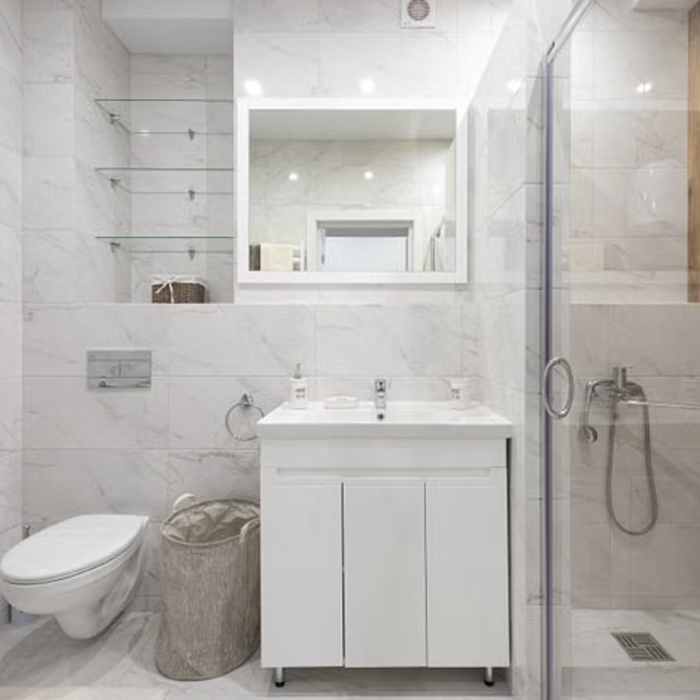
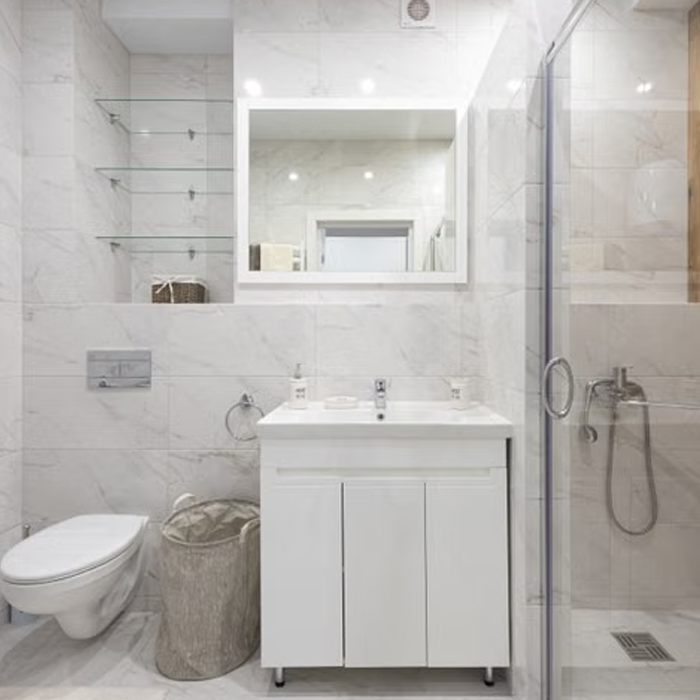
If you're remodeling your bathroom, choosing your major finishes together can make it easier to create a cohesive design.
For example, a marble-look vinyl floor can coordinate with a quartz vanity countertop, while a classic porcelain tile floor can complement a natural-stone-inspired shower.